An operator's-eye view inside the Amitiza trial office: five weeks, six law firms, zero operational failures.
By the numbers: 6 law firms. 27+ attorneys and paralegals. 5 weeks at trial. 6 high-speed printers on-site. 0 operational failures. 100% rated Excellent.
Every trial runs on an operation nobody sees. This is that operation, hour by hour and decision by decision. For the full engagement, including court reporting, trial graphics, and hot seat presentation, read our case study The Amitiza Trial: Four Service Lines, One Operation, Five Weeks in Federal Court.
The Setup: A Coalition, Not a Client
Six law firms. One war room. One deposition calendar. One trial. When the Amitiza matter moved to federal court in Boston for a five-week trial, the coalition of firms needed an operation that could serve all six without friction, confusion, or delay between teams.
BlueBear built that operation. Not as a vendor delivering equipment and walking away, but as the operational backbone embedded with the trial team from the first day of setup to the final gavel, including 24/7 emergency response for all five weeks.
Plan. Build. Operate. Adapt.
Four words that sound simple. Here is what each one meant on the ground in Boston.
Plan
Before a single attorney arrived, BlueBear reserved space, parking, meals, print capacity, and network infrastructure. A downtown Boston courthouse means limited, expensive, and frequently full parking, the kind of detail that derails a trial day if nobody plans for it. BlueBear reserved a city staging space near the hotel, creating a predictable base for the trial van before day one.
Build
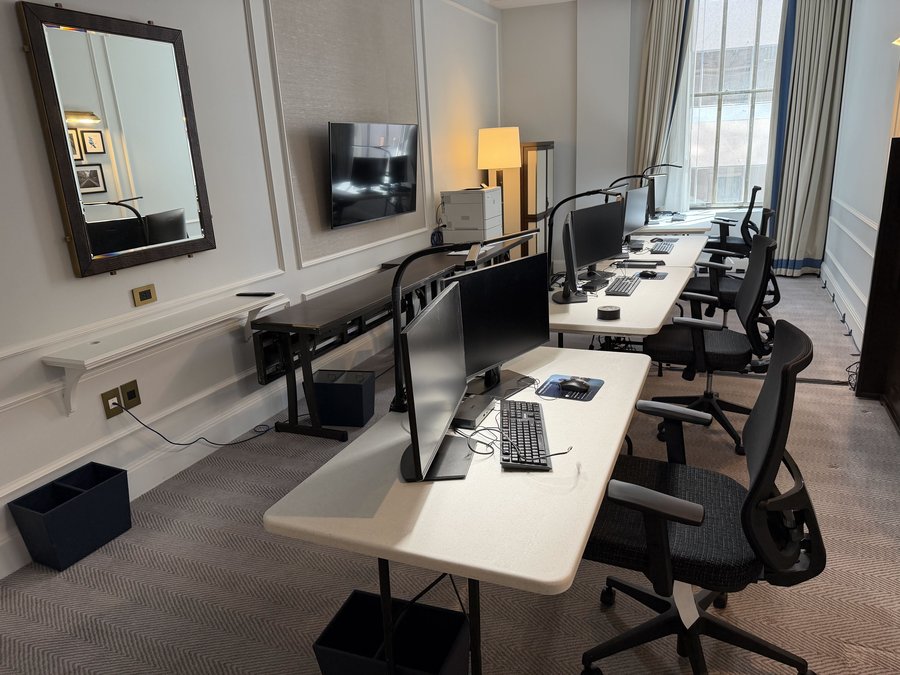
BlueBear installed a secure high-speed wired and wireless network, dual-monitor workstations, conference rooms configured for Zoom, Teams, and Google Meet, six high-speed printers, two production-grade multifunction copiers with hole-punch and stapling, and a courthouse printer for last-minute revisions. Because six firms shared the space, the workspace was zoned into quiet, functional areas by firm and assignment. Attorneys could work alone, in small teams, or gather for witness prep without stepping on each other.
Operate
Every day, BlueBear ran transportation, catering, supply checks, and evidence movement on a schedule built around the court, not the other way around.
Adapt
The court schedule changed repeatedly across five weeks: half days, extended days, shifting witness order, last-minute exhibit revisions. The hotel rooming list changed just as often, and BlueBear managed every revision directly. Not one booking broke down. BlueBear absorbed every change in real time so it never reached the legal team as a problem.
A Typical Logistics Day
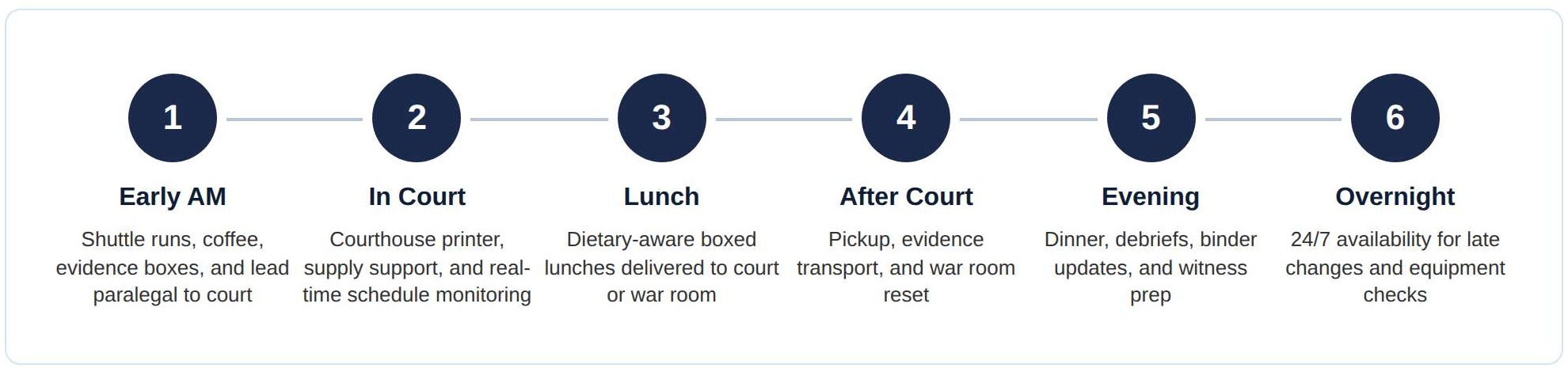
Operating principle: the trial team should arrive to a stocked, connected, ready-to-work environment every morning and return to a prepared war room every evening.
Most case studies stop at the summary. Here is what one day actually looked like.
6:30 AM: Shuttle departs. Coffee and espresso ready. Evidence boxes loaded on the first run with the lead paralegal so the courtroom team could prepare immediately on arrival.
Midday: Courthouse support. Boxed lunches coordinated around dietary needs and the court schedule: sandwiches, wraps, and salads that didn't require heating or a break in momentum.
While court was in session: War room prep. Supplies restocked, printers and copiers checked, binder printing supported, and meeting spaces prepared for the evening ahead.
End of day: Return and reset. Shuttle pickup. Evidence boxes and sensitive materials transported by BlueBear staff, not rideshare. The courthouse was within walking distance of the hotel, but the shuttle stayed available for anyone carrying materials or needing a faster return. Dinner delivered. War room stocked, connected, and ready for debriefs, witness prep, and strategy sessions late into the night.
Four Moments That Could Have Gone Wrong
Confidential witness transportation
When the court schedule shifted, witnesses needed to move quickly and quietly. BlueBear used controlled transportation, not taxis or rideshare, protecting confidentiality and reducing the risk of information leaks at a moment when discretion mattered most.
Last-minute printing and binder changes
Print errors, missing binders, and last-minute exhibit changes are common in high-pressure trials. Because BlueBear had printers, supplies, staff, and courthouse support already in place, these issues were resolved internally. They never reached the court, the judge, the jury, or opposing counsel.
The parking problem nobody budgets for
Downtown Boston parking near the courthouse was limited, costly, and unreliable. A reserved staging space near the hotel eliminated a source of daily delay that would otherwise have eaten into attorney time every single morning.
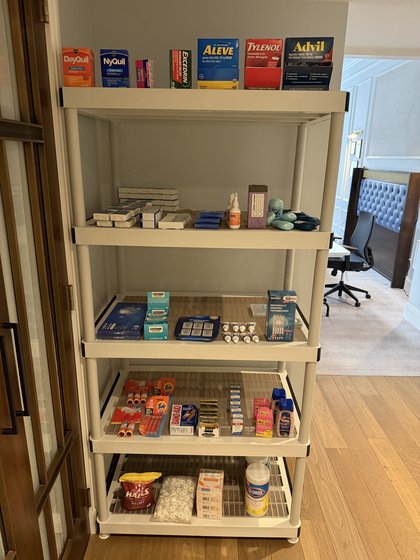
The supply shelf
Stocked with everything from toner to pain relievers, the supply station is a small detail with an outsized effect: a team that never has to leave the building to solve a problem it shouldn't have to solve.
What Would Have Broken Down Without This
Without a dedicated logistics operation, the six firms would have had to divert attorney and paralegal time toward transportation, meals, printer troubleshooting, supply runs, witness coordination, and equipment issues, all while trying a five-week federal case.
A missed print job. A late witness. An empty toner cartridge. A delayed meal. In a complex trial, those interruptions compound. Each one is a small tax on the team's attention at the exact moment attorneys can least afford to pay it.
The Cost Side of Reliability
Operational reliability has a cost side, not just a risk side. Reserving a city parking space near the hotel avoided the higher, unpredictable cost of repeated valet or public garage parking across five weeks and six firms.
Having printers, supplies, and courthouse support already in place removed the need for costly emergency outsourcing, rush printing fees, or attorney time spent solving administrative problems instead of working the case.
The Operational Backbone, By the Numbers
- Parking and downtown access: a reserved city staging space near the hotel meant faster van access and no daily delay.
- Last-minute document changes: on-site high-speed printing and binder supply resolved urgent jobs before they reached the courtroom.
- Witness transportation: controlled BlueBear transport, not rideshare, protected confidentiality and kept witnesses on schedule.
- Shifting court schedule: real-time adjustment of meals, pickups, and the war room let the team respond to the trial, not the logistics.
What Clients Said
"Professional team. Proficient and efficient. Timely responses to any needs. Incredible team!"
Dr. Kelly Rinehart, Roberts Law Firm, PC
"Thought of all contingencies. Was prepared. Very willing."
Trial attorney, plaintiff-side firm
This is what "operational backbone" means in practice. Six firms. Zero operational failures. A trial team free to focus on what mattered.
BlueBear provides trial logistics, trial graphics, courtroom presentation, court reporting, and litigation support for complex civil and criminal matters.
Call (800) 816-5874 to plan your next trial.